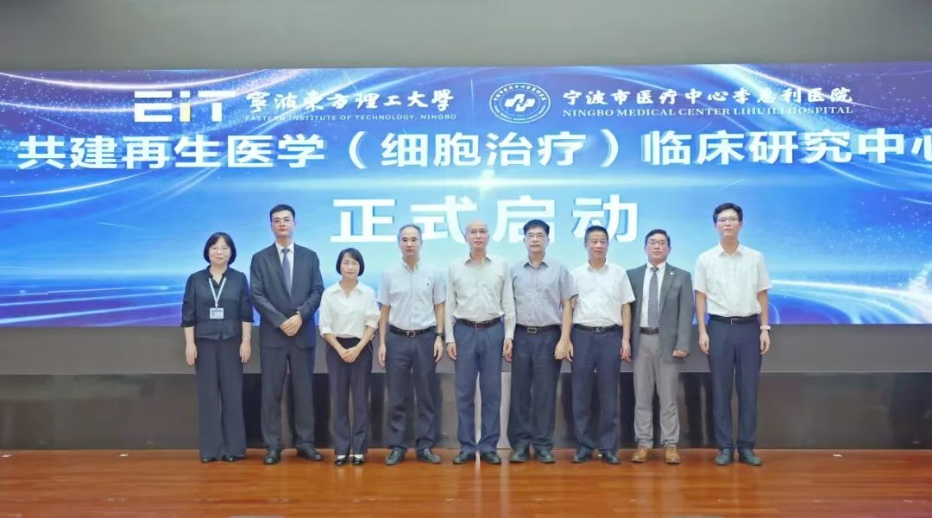
On September 29, the Clinical Research Center for Regenerative Medicine (Cell Therapy), jointly established by the Eastern Institute of Technology, Ningbo (EIT), and Ningbo Medical Center Lihuili Hospital, was officially launched at Lihuili Hospital. The launch marks an expansion of the partnership from joint basic research laboratories and an academician workstation to a fully operational research platform. It also extends EIT’s capacity to deliver scientific and technological advances in interdisciplinary life and health sciences further into the medical industry.
Attendees included Shanfu Chen, Deputy Director of the Ningbo Science and Technology Bureau; Jianlin Zhou, Full-time Deputy Director of the Ningbo Patriotic Health Campaign Committee; Huanhuan Yu, Deputy Director of the Ningbo Administration for Market Regulation; Wenjun Zeng, Vice President of EIT; Zongwei Cai, Associate Vice President of EIT; Yeming Zhang, General Manager of Shanghai Nuoya Hengxin Medical Technology Co., Ltd.; Chunhai Ke, Secretary of the Party Committee of Lihuili Hospital; and Honghua Ye, President and Deputy Secretary of the hospital’s Party Committee. The launch ceremony was chaired by Zhouji Shen, Vice President of Lihuili Hospital.
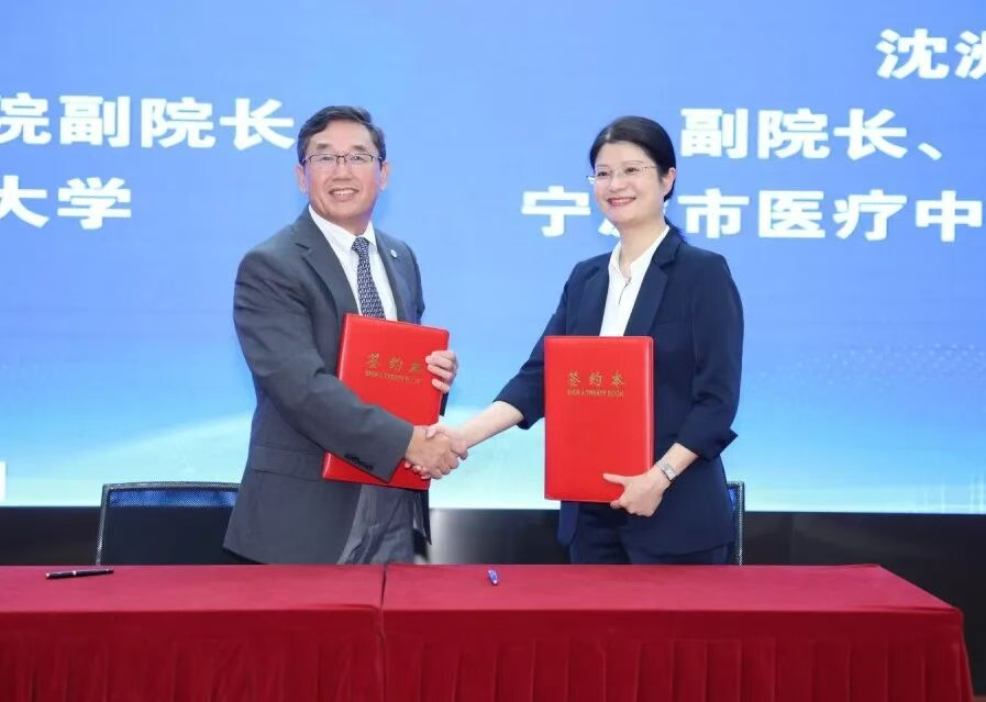
Agreement signing ceremony
Ping Wang, Associate Dean of the Graduate School and Chair Professor at EIT, and Zhouji Shen signed the joint development agreement on behalf of the two institutions. Together with the guests, they pressed the launch button, formally bringing the center into operation.
1.From Individual Collaborations to an Integrated Partnership
Regenerative medicine and cell-based product manufacturing are major areas of international competition in biomedicine and key priorities in the development of the life and health industry in Zhejiang Province and Ningbo. The joint initiative aligns with national policies promoting the integration of medicine and engineering and the translation of scientific and technological advances into practical applications. It also responds to the region’s need to develop new quality productive forces.
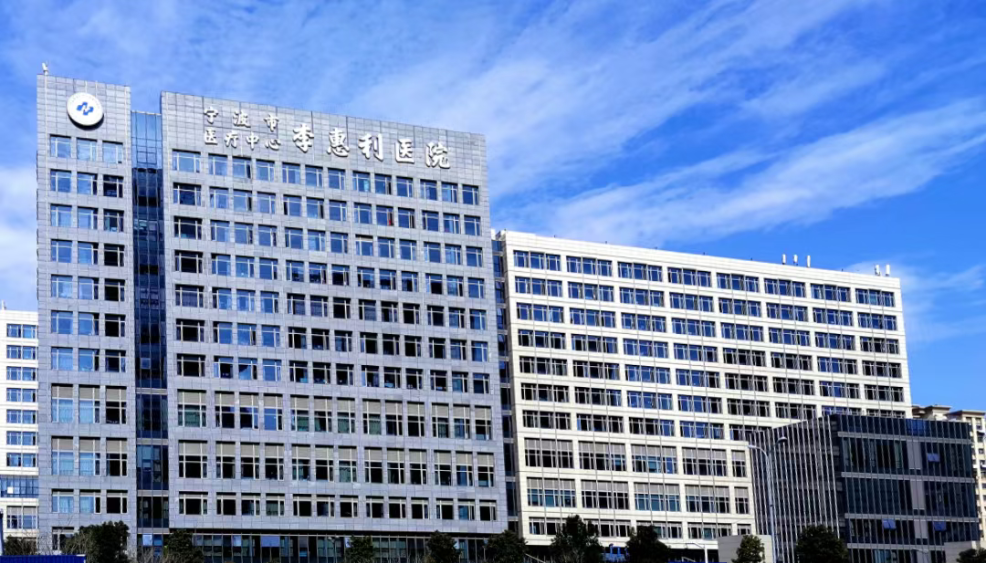
Lihuili Hospital
The two institutions had previously established a key laboratory for digital medicine and an academician workstation for research on environmental regulation of metabolism and major diseases, laying a solid foundation for collaboration between medicine and engineering. The new center builds on and upgrades these existing efforts. EIT will focus on fundamental scientific and technological challenges and manufacturing process standards; the hospital will guide research through clinical needs and provide settings for validation; and industry partners will undertake engineering scale-up and commercialization. Together, they will establish a complete pathway from basic research and technology development to clinical validation and the translation of research outcomes into applications.
2.Advancing Medicine Through Engineering and Interdisciplinary Strengths
As a new type of research university built to high standards, with a small but excellent, innovative, and international model, EIT has developed distinctive strengths in frontier interdisciplinary fields, including artificial intelligence, integrated circuits, intelligent manufacturing, unmanned technologies, new energy and advanced materials, and life and health sciences.
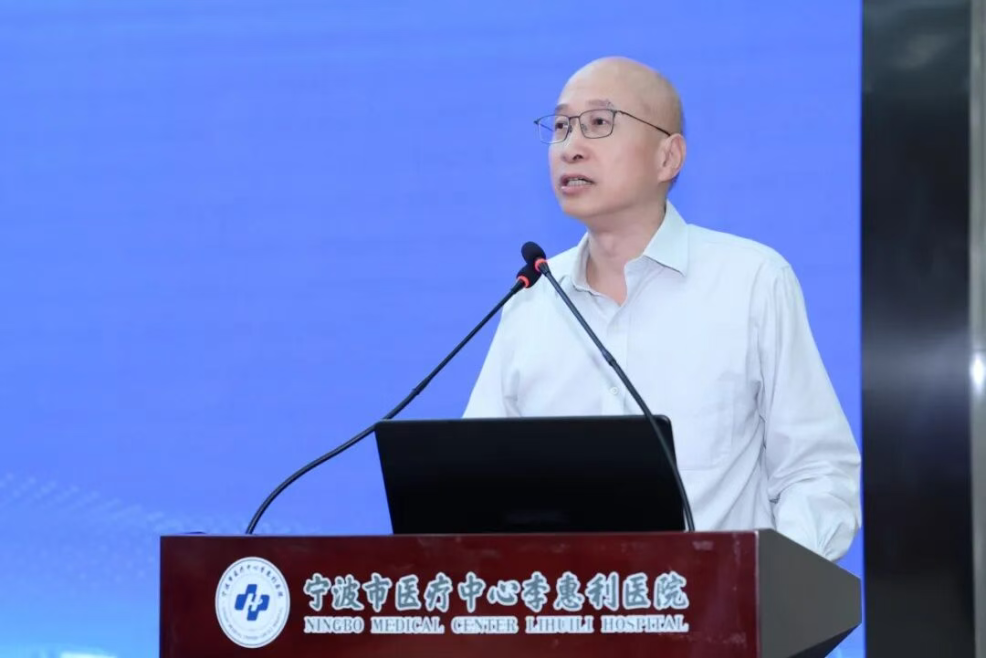
Wenjun Zeng delivers remarks
Wenjun Zeng said that EIT would use this initiative to further realize the potential of collaboration across biomedical engineering, materials science, artificial intelligence, and other disciplines, bringing their strengths together to tackle research challenges. He outlined three expectations for the center. First, it should conduct research of real value and define distinctive research directions with clear potential for practical application. Second, it should always put safety and quality first, uphold rigorous quality, safety, and ethical safeguards, and ensure control and traceability throughout the entire cell-related workflow. Third, it should remain open to collaboration and become a platform that brings together talent, projects, and research outcomes capable of serving industry, connecting the full chain from research to industrial application.
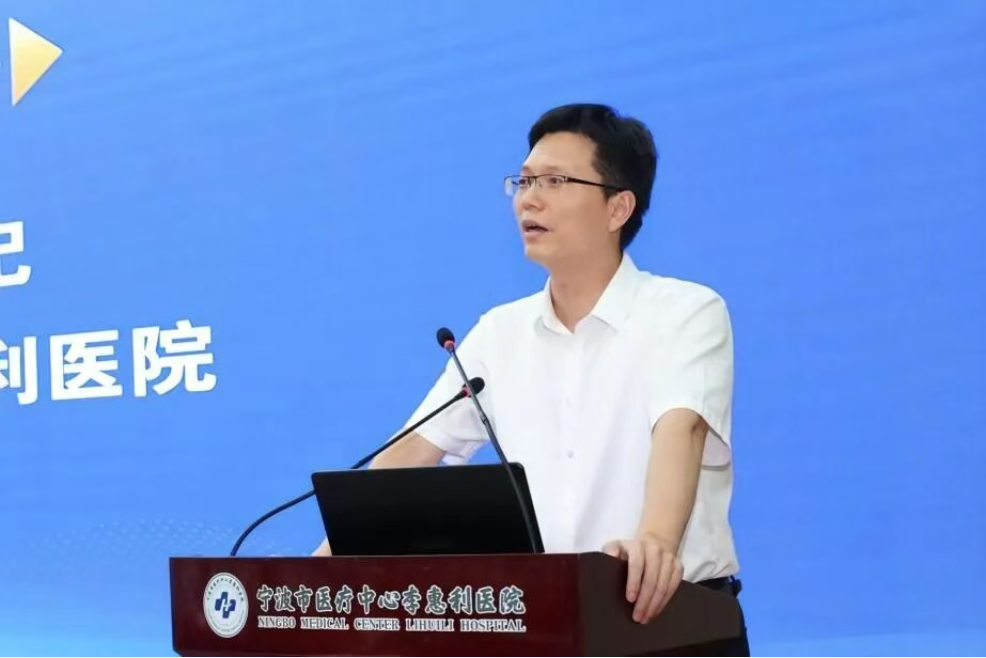
Chunhai Ke delivers remarks
Chunhai Ke noted that the hospital consistently ranks among China’s top 100 hospitals in overall performance and has received an A+ rating in the national performance assessment of public hospitals for several consecutive years. With one of the richest resources of complex and critically ill cases in eastern Zhejiang, along with clinical teams and clinical sample resources, the hospital provides a strong foundation for the clinical validation of relevant technologies. He outlined three priorities: conducting research that addresses public needs and connects basic research with the translation of findings into applications; developing talent at the intersection of medicine and engineering through two-way staff exchanges, the placement of key personnel, and the cultivation of interdisciplinary teams; and pursuing joint projects across medicine, research, and industry, with industry engagement accelerating the application of research outcomes.
Yeming Zhang said that the company would draw on the complementary strengths of the hospital, university, and industry to increase resource investment, build effective pathways for translating scientific and technological advances, and bring regenerative medicine technologies into practice for the benefit of the public.
Ping Wang delivered a keynote address entitled “Regenerative Medicine and Cell Therapy: A Milestone in the Life Sciences for the Benefit of Humanity.” He noted that biomedical technologies are at a turning point marked by major breakthroughs, creating significant opportunities for the development of regenerative medicine and cell therapy.
3.Clinical Research Center for Regenerative Medicine and Cell Therapy
The center is positioned as a platform for technology development and clinical translation. It will focus on three core functions to help shape the future of regenerative medicine.
Pursuing major breakthroughs. Building on core technologies for manufacturing cell-based products, the center will conduct research on stem cells, exosomes, tissue repair, and interventions for major chronic diseases. It will explore new approaches to cell therapy and develop a “Ningbo approach” to the repair of damage associated with refractory diseases, therapeutic efficacy, and safety management.
Developing talent. The partners will jointly train master’s and doctoral students. Drawing on a Good Manufacturing Practice (GMP) manufacturing platform, they will build an innovative team of young researchers working at the intersection of medicine and engineering, rooted in Ningbo and equipped with an international outlook.
Generating original research outcomes. Through in-depth research on cell-based product manufacturing and mechanisms of regeneration and repair, the center will produce high-value academic results and independently owned intellectual property. It aims to become a demonstration hub for the clinical translation of regenerative medicine in eastern Zhejiang.
EIT’s contribution to the center is led by Professor Ping Wang’s team. The team has long worked at the intersection of bioengineering and nanotechnology and has extensive expertise in stem cell culture and regulation, the preparation of biologically active cellular components, and biomimetic biomaterial design. Its capabilities span the full research and development process, from understanding cellular functions and developing manufacturing processes to quality evaluation.